
Kitesurfing Albania Road Trip: Our Personal Travel Stories about the Local Kitesurf Scene

In the summer of 2024, we planned to spend two months in Greece, revisiting our favorite and familiar kitesurfing spots. But we also wanted to add something new to the mix—a fresh experience to complement the well-known Greek locations. So, the idea of a 14-day road trip through Albania and into Greece was born. Not much is known about kitesurfing in Albania, and our curiosity was piqued. We selected a few promising stops, packed up our campervan for a two-month adventure, and set off.
Hitting the Road: The Beginning of Our Kitesurfing Road Trip
Our route took us through Slovakia and Hungary, where we spent our first night. The next day, we continued through Bosnia and Herzegovina, making plans for a stop at the Croatian kitesurfing spots on the Neretva River before heading into Albania. The idea was to spend a few days riding there, relax, catch up with old friends at the Surfflow campsite. And then continue on towards Albania.
Traveling through Bosnia and Herzegovina
Bosnia greeted us with unexpected heat—temperatures reached nearly 40°C. And so, our road trip really began there, in a country we hadn’t known much about before. Since the forecast for the Neretva didn’t promise much wind, we decided to add a few stops to explore the area around Mostar.
Mostar
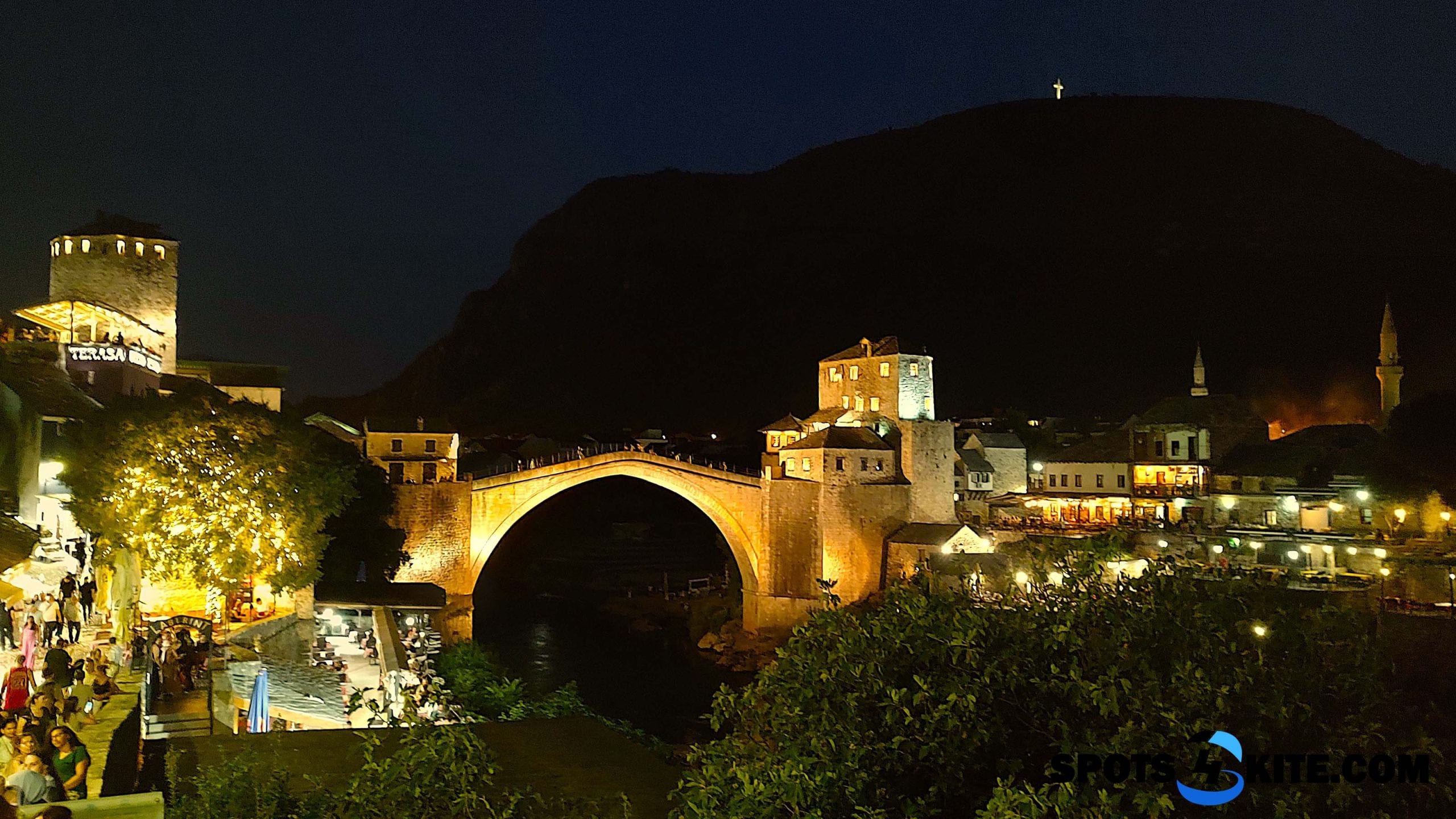
We parked right in Mostar in the evening and went for a short walk to its most famous landmark—the iconic Old Bridge (Stari Most). Mostar is a historic city split by the Neretva River, connected for centuries by this beautiful arch bridge. It stood here for nearly 430 years, surviving many conflicts, but during the Croatian-Bosniak war in the 1990s, it was destroyed by shelling and collapsed into the river. Its grand reopening took place in July 2004, and today, the bridge and the historic city center are listed as UNESCO World Heritage sites. We spent about two hours strolling through the city and taking a break at a café.
Vrelo Bune
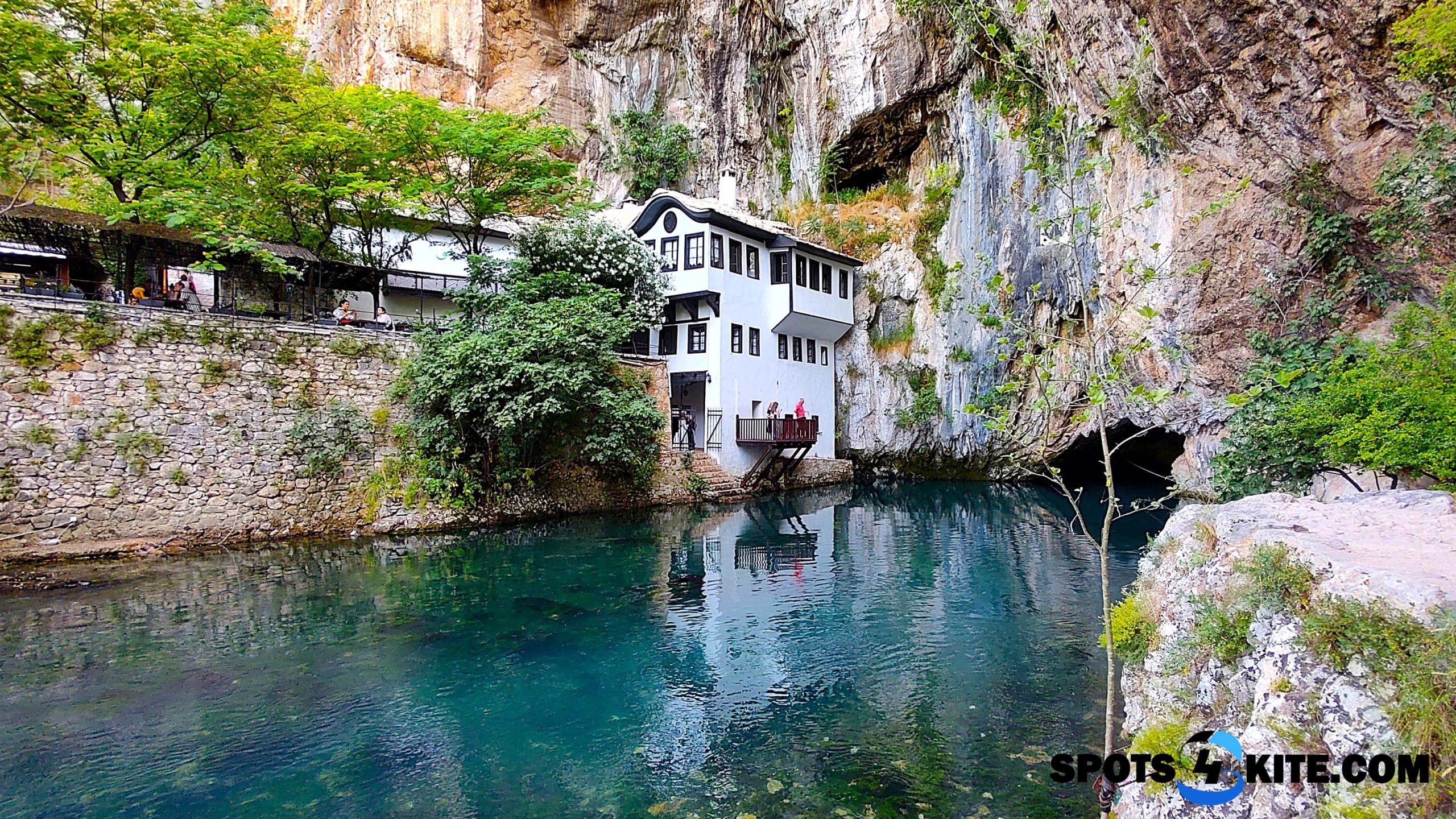
Around midnight, we drove to the village of Blagaj and parked overnight in a lot right by the entrance to the Vrelo Bune spring, planning to take a morning walk there. Vrelo Bune is a powerful karst spring of the Buna River, emerging directly beneath a towering cliff. It’s considered one of the most powerful of its kind in Europe and the whole place has a calm, almost mystical atmosphere. This same atmosphere once drew the dervishes, who built a tekke (monastery) here around 1470, where they could peacefully study the Quran. Some parts of the monastery are open to visitors for a €10 fee, so after a short walk, we explored these unique and historical spaces.
Kravica Waterfalls
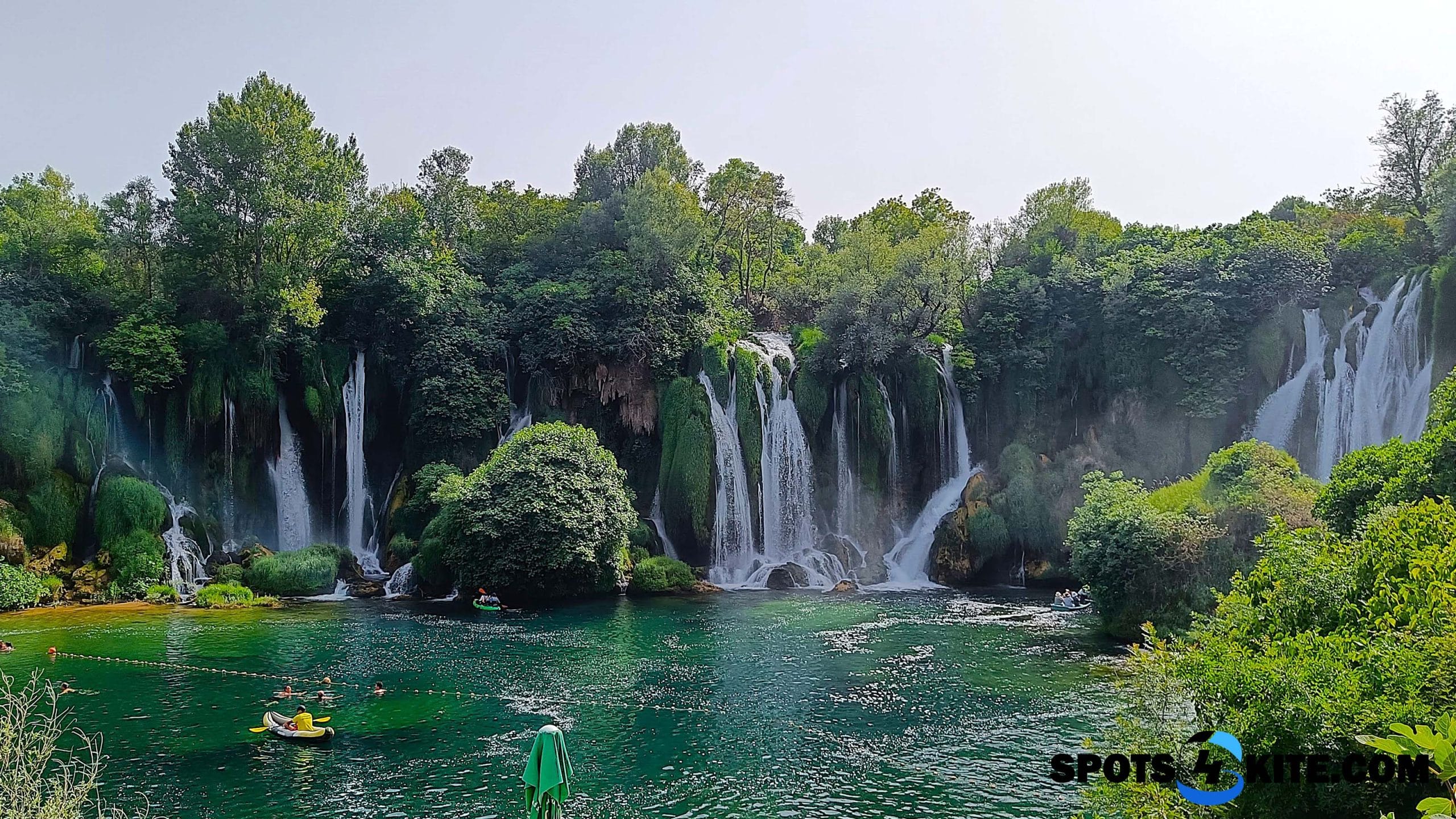
The rest of the day was spent relaxing at the Kravica Waterfalls—a natural swimming area with an impressive cascade over 120 meters wide and 27 meters high. Even though it was only the end of June, the high temperatures had attracted hundreds of visitors, creating a lively rather than peaceful atmosphere. Still, swimming in the icy water right beneath the waterfalls was an unforgettable experience. Especially for our son—on our first visit, he was only two years old and didn’t remember much.
A Stop at the Neretva River
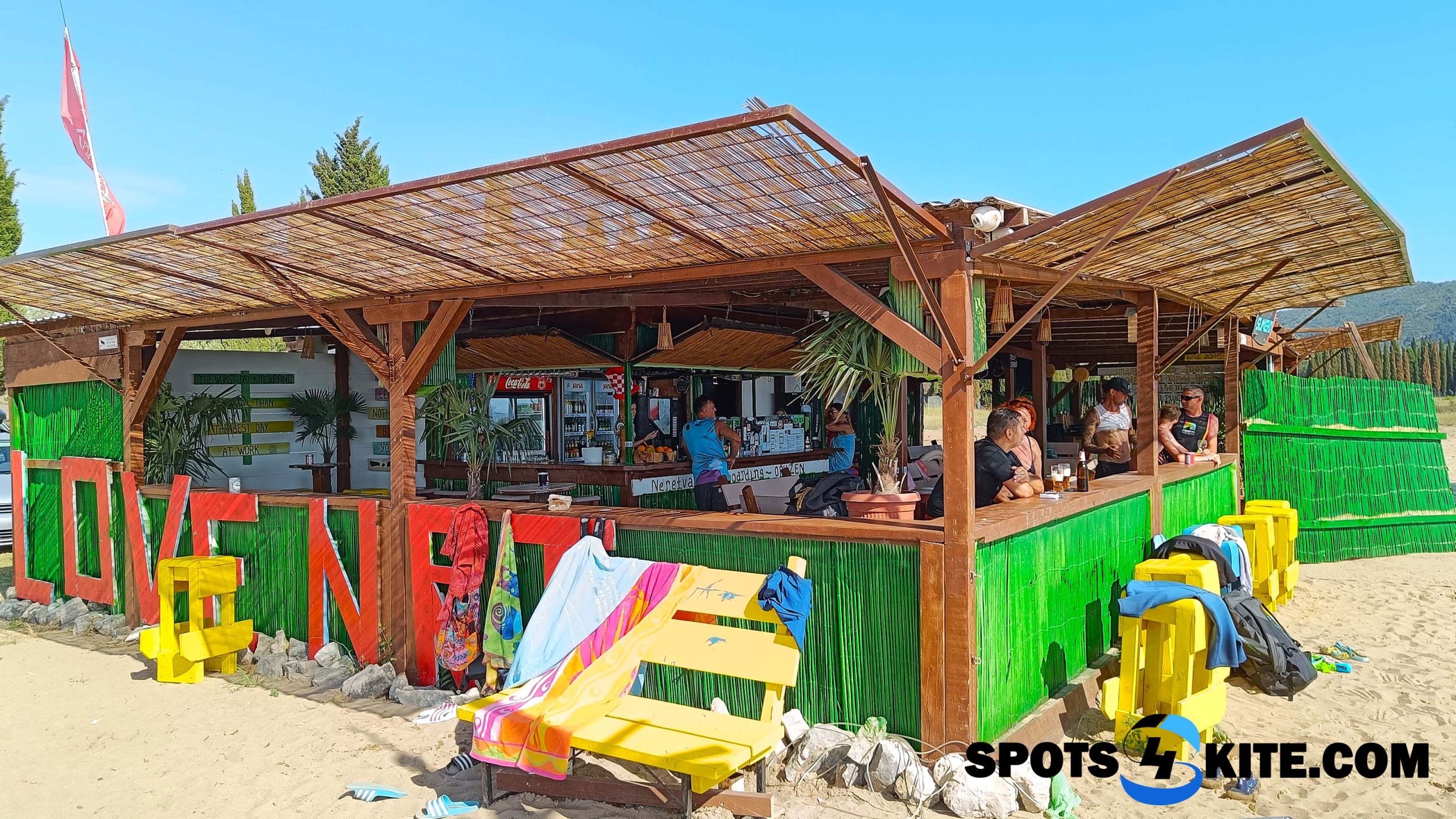
In the evening, we arrived at the Neretva River valley in Croatia. From Kravica Waterfalls, it’s about an hour’s drive to the Neretva Kiteboarding spot at Ušće Beach. We stopped by the bar to say hello to the spot’s owner and then headed straight to the Surfflow campsite, where we arranged to stay for three nights. We were excited to return to this familiar spot and catch some wind.
We’ve had some wonderful times at the Neretva in the past. In 2020, when Covid restrictions kept us from traveling to Greece, we spent a month here in a tent and enjoyed one of the best kite seasons in September. A year later, we came back for six weeks and again had an amazing experience.
Unfortunately, this year luck wasn’t on our side. The situation with the campsite owner wasn’t great, and one terrible, sleepless night was enough for a whole separate story. Temperatures—both air and water—were extreme, stifling any chance for thermal winds to develop. Over three days, we managed only a few short rides, just enough to swap out and keep moving. Honestly, the Neretva was a bit of a letdown this time, which only made us more eager to see what Albania had in store. After four days, we packed up and moved on.
Discovering Albania: Beaches, Spots, and Adventures
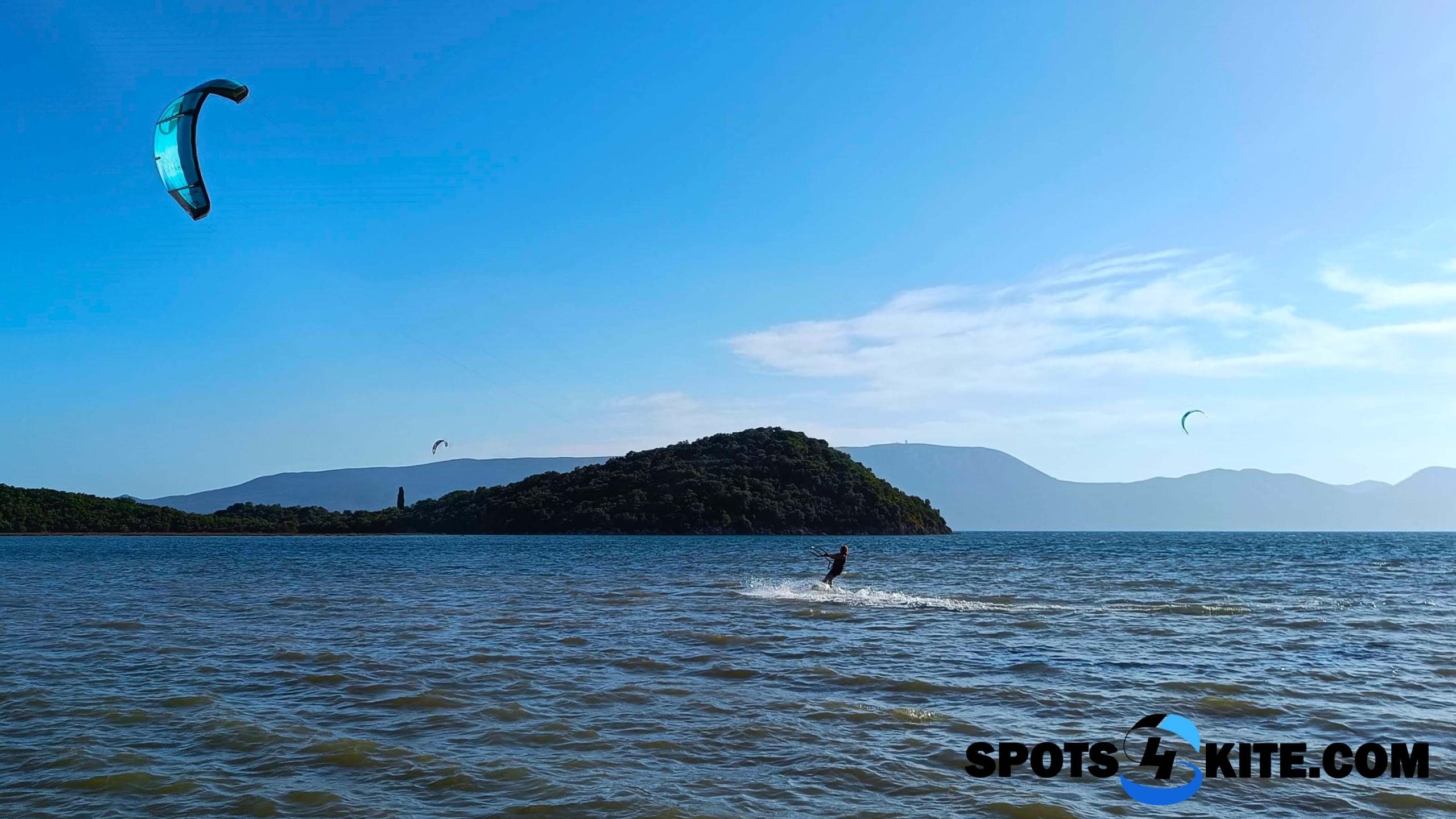
The journey from Croatia’s Neretva region took us an entire day, driving through Montenegro’s interior. In Montenegro, the main kitesurfing destination is the town of Ulcinj and its 10-kilometer-long Velika Plaza beach, but this time we skipped it and headed straight to Albania. Our first stop was Viluni Beach, near the town of Velipojë.
We arrived in the town just after midnight. Using the Park4Night app, we found a parking spot right on the beach. A thunderstorm woke us early in the morning, and it was still drizzling as the day began. Once the weather cleared, we took a walk to explore the beach and see if there was any potential for kitesurfing.
Velipojë – Viluni Beach
Velipojë lies in northern Albania, just across the border from Montenegro. It’s a medium-sized town, and judging by the number of hotels, campsites, and beach bars with umbrellas, it’s clearly a popular summer destination.
At the southern end of Viluni Beach, there’s a small sandy spit and access to a lagoon. We moved our campervan to the last parking lot before Viluni Beach Bar, almost right on the lagoon’s shore. The sandy spit has a gentle slope into the water, with plenty of space for launching kites and a good distance from the bars, umbrellas, and any potential swimmers. The bar staff didn’t mind us parking overnight, though they had no idea about kitesurfing. By afternoon, the summer weather had returned, and a light westerly breeze started to blow. The spot looked promising, and so did the forecast for the next day.
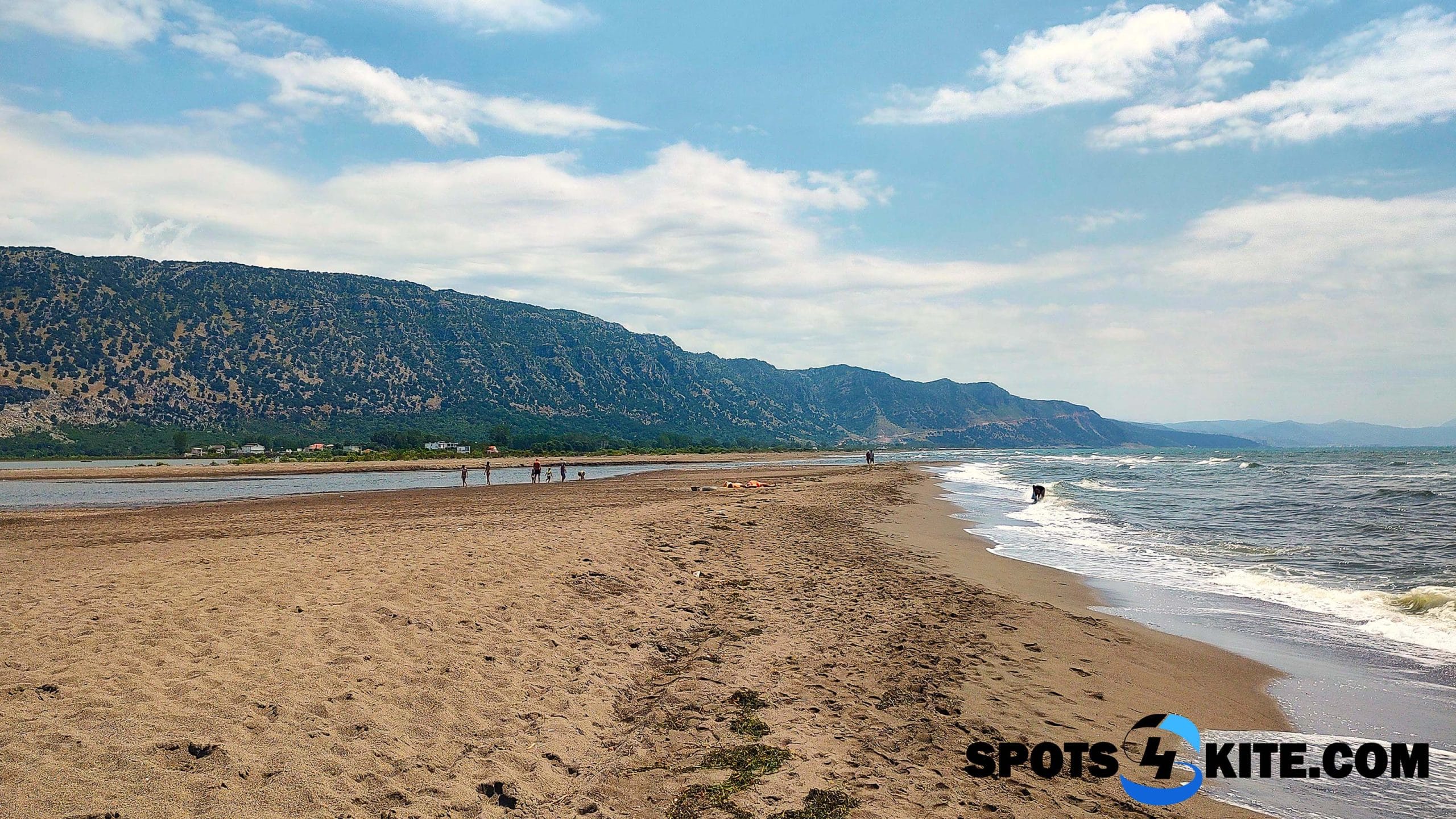
The next day, the wind picked up a bit more—around 12 knots—and the surrounding hills added a bit of a thermal boost. With a side-onshore wind, we didn’t hesitate: we set up our 13 and 15 m² kites and went out to test the local conditions. Unfortunately, soon after, clouds started gathering over the mountains, and the wind dropped again.
Although Viluni Beach has good conditions for kitesurfing, it’s better suited as a short stopover—ideal for chasing a forecast and preferably outside the high season. With our kites up, we felt a bit like we were from another planet.

The forecast for the next day promised solid westerly winds, and we didn’t want to take any chances. So, the next morning after breakfast, we headed straight to Albania’s main kitesurfing spot: Rinia Sector. We had been on the road for over a week and still hadn’t had a proper kite session.
Rinia Sector – Albania’s Best Kitesurfing Spot
The place known as Rinia Sector is located north of the large port city of Durrës. We set out on a Saturday, and the traffic in the area was intense. We didn’t arrive at the spot until around three in the afternoon, but from a distance, we could already see dozens of kites in the air and couldn’t wait to explore this new place and its fresh experiences.
Conditions and Environment at Rinia
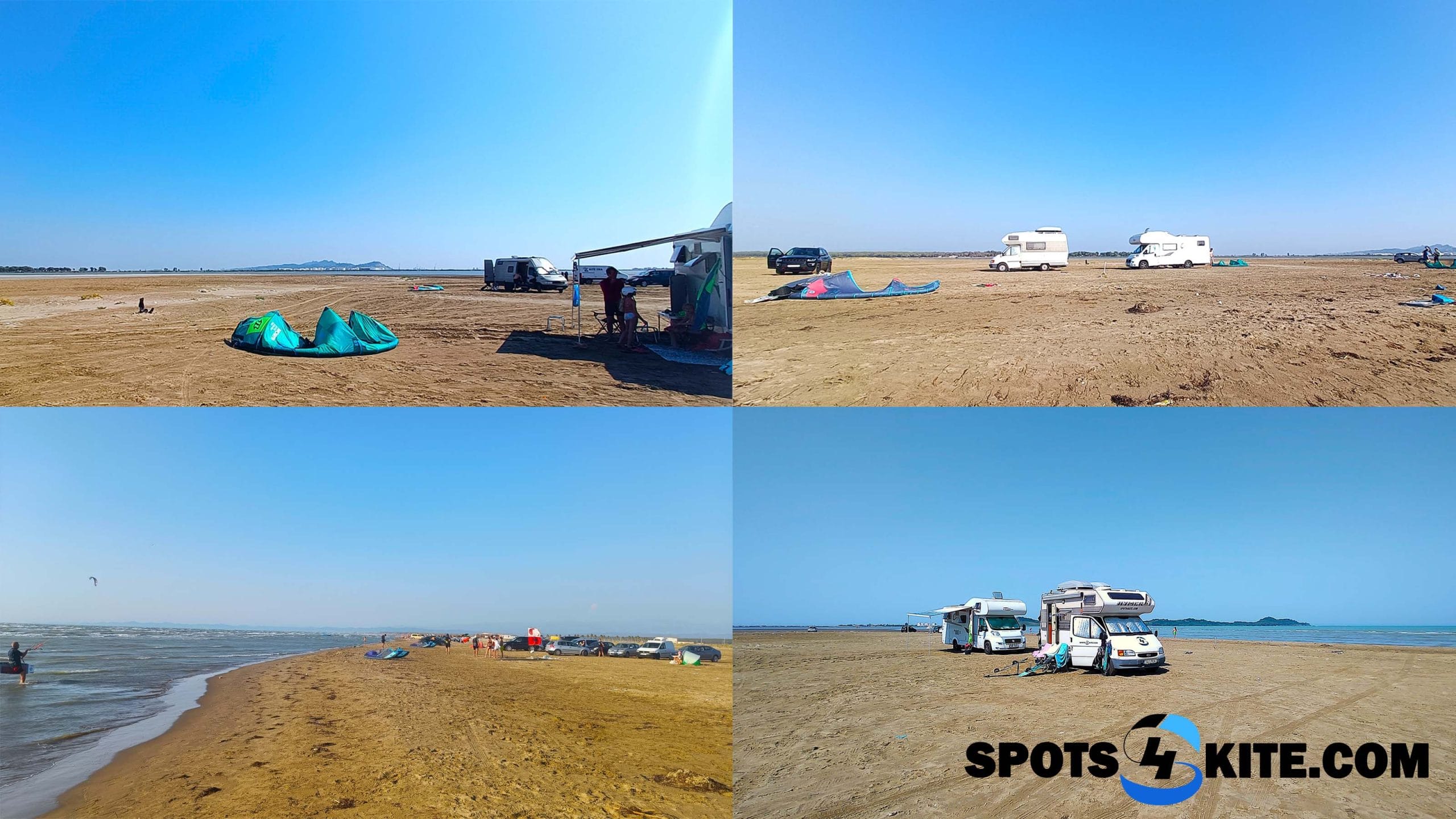
Rinia Sector is a truly unique spot—a huge beach, lagoons, and wetlands, all set against the industrial backdrop of fuel storage tanks in the Durrës port. The kiting area is reached by a dusty road from the town of Rinia, which crosses one of the lagoons. At the end of this road, there’s a massive parking lot that can fit hundreds of cars.
To the north, the beach stretches for several kilometers, lined with umbrellas, bars, and more parking areas. In contrast, the southern part of the beach is wild and natural. You can drive comfortably along the packed sand all the way to the end, where kitesurfers will find a true paradise.
The entire spot is covered in hard, compact sand—perfect for parking, and the area is so vast that there’s plenty of room to set up and launch kites right next to your parked car. The water entry is very gradual, and even several dozen meters from shore, the depth might only be waist-high. The prevailing wind is a westerly, blowing side-onshore to onshore. The shallows create small flat-water areas near the beach, but further out, the water is more choppy, and with stronger winds, small waves develop. There’s a beautiful “butter flat” zone on the sheltered side in the lagoon, but unfortunately, the water there is barely ankle-deep and not very inviting for riding.
How We Enjoyed Kitesurfing at Rinia
When we arrived, it looked for a moment like the wind was dying. We met a Czech family and the local crew from @kitesurf_albania—everyone told us they’d already been riding since 11 in the morning. We didn’t want to waste time, so we pumped up our 12 m² kite and hit the water. First, Karel went out, then he took our son for a ride, and finally, Veronika had her turn.
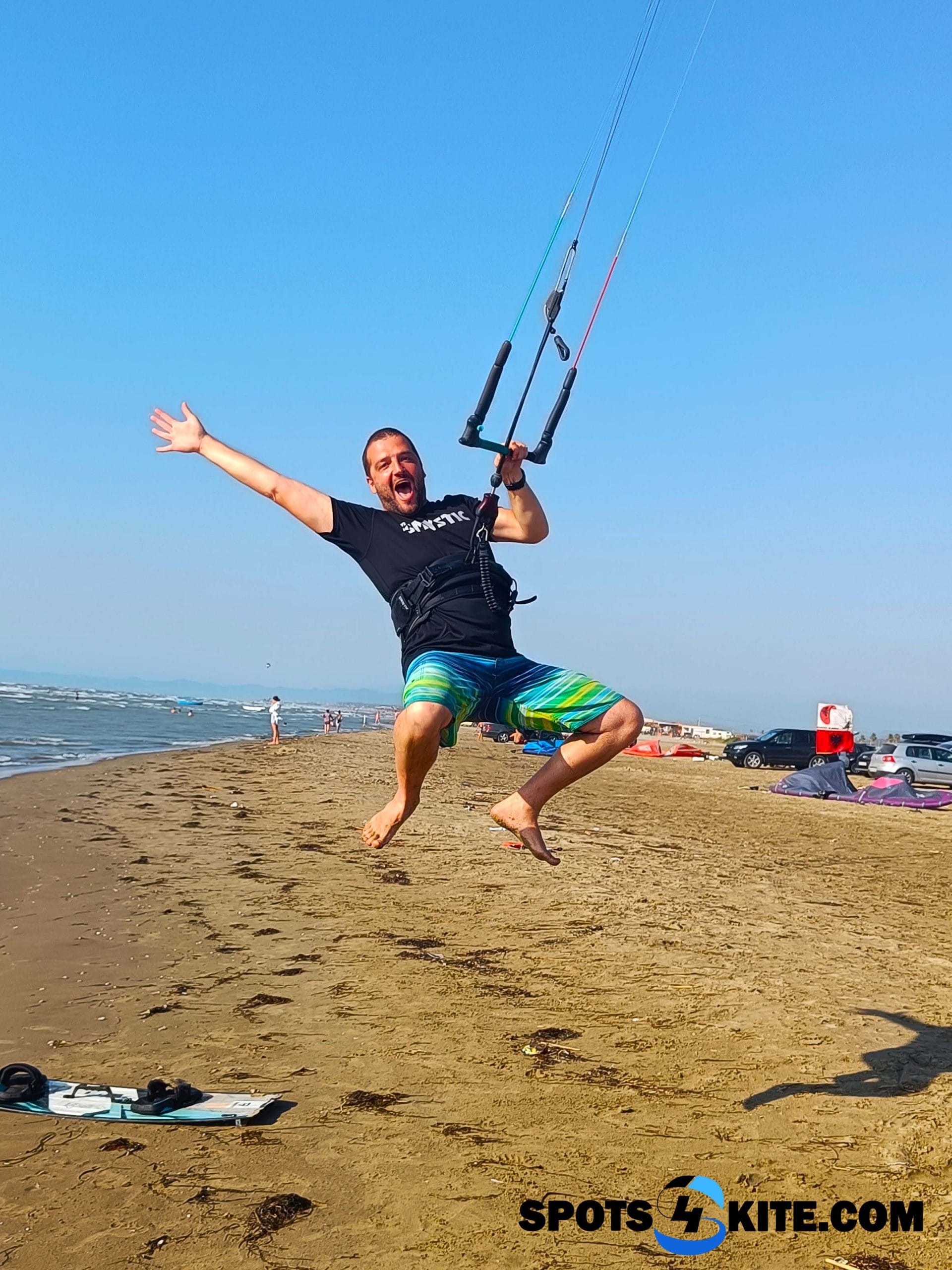
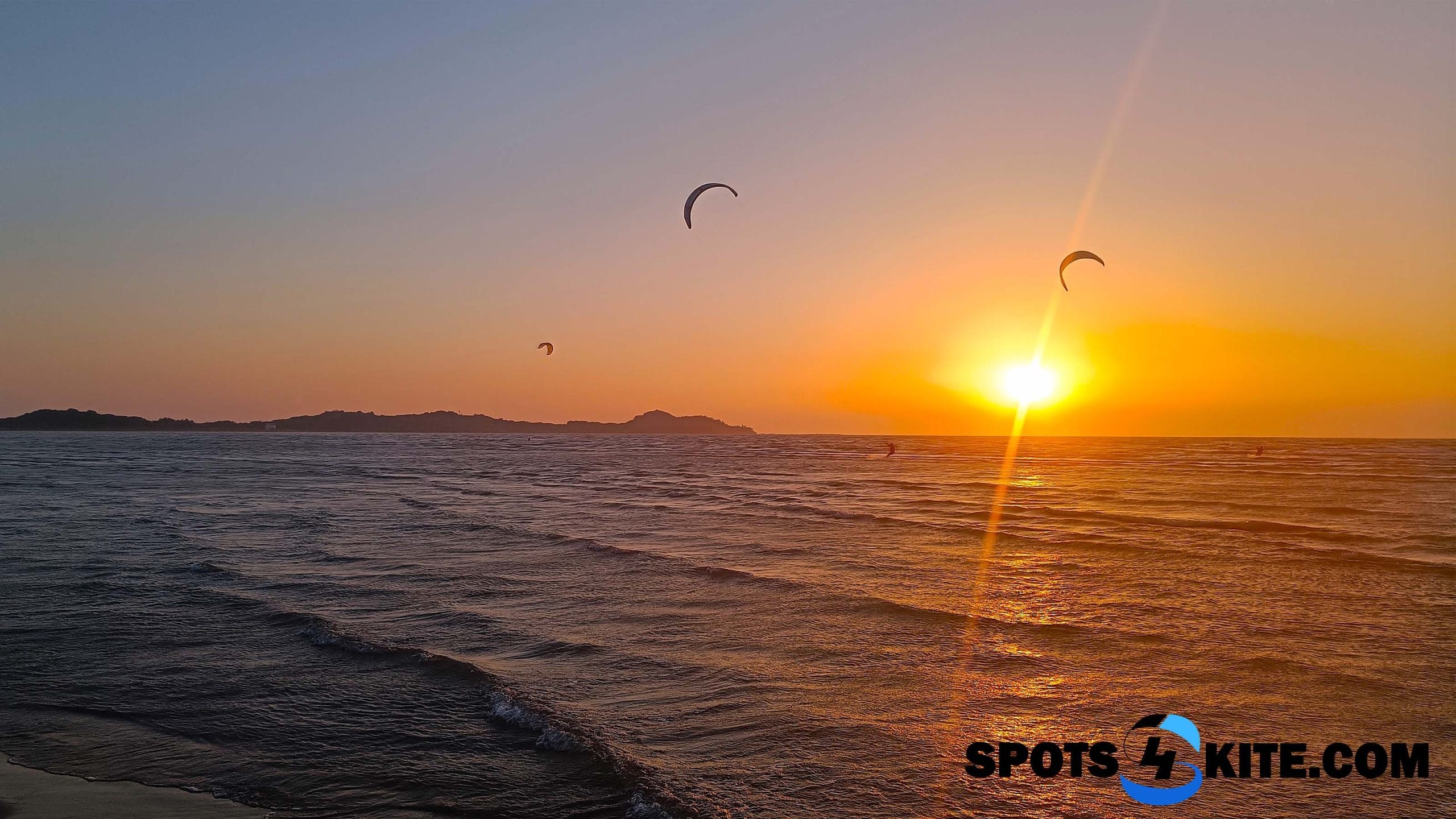
About an hour and a half in, the wind unexpectedly picked up again, blowing over 20 knots. We quickly switched to our 9 m² kite. With the stronger wind came bigger waves forming over the shallows near the shore. The conditions were more challenging, but the wind was surprisingly stable, so we had a great time even in this new environment. Around eight in the evening, the wind dropped slightly, but the conditions stayed good until dark. Karel took the 12 m² kite, and Veronika the 9 m², and we kept riding together until sunset and total exhaustion. The wind only finally calmed down during the night.
Sunday Surprises
Rinia Sector has one big advantage—free camping. You can comfortably drive your camper right up to the water, set up your kites, and stay overnight. Despite being close to the city, it felt like we were in the wilderness. The only downside was the amount of trash. Although the local kite community does their best to keep the beach clean and provide makeshift trash bins and bags, it felt like fighting a losing battle.
The next morning, we understood why. We had fallen asleep on an almost empty beach, but by Sunday morning, we were stunned to see hundreds of people from Durrës coming for a picnic. Before we could even finish packing up the camper, we were surrounded by dozens of cars and hundreds of people—whole families and groups of friends with grills, crates of beer, and a variety of food. The beach turned into one big chaotic space, full of music, noise, smells… and trash, which quickly piled up.
There was no wind in the forecast for Sunday, so we decided to get out of there as soon as possible. Our next stop wasn’t a kitesurfing spot, but a beautiful place to visit: Cape Rodonit.
Cape Rodonit: History and Raw Beauty
Cape Rodonit is located on Albania’s northwestern coast, not far from Durrës and Rinia. This narrow peninsula stretches several kilometers into the sea and offers breathtaking panoramic views of the surrounding landscape. Even getting there is an adventure. The road is narrow and winding, snaking across the peninsula for dozens of kilometers. The further you go, the worse the road gets—potholes, steep climbs, rocks… exactly what you’d expect as a traveler in an old campervan!
Currently, the end of the cape is private property. At the entrance gate, there’s a €10 fee for vehicle access and parking. However, overnight parking is allowed here, and we made use of this. A short walk from the parking lot brings you to Rodonit Beach and the path leading to Rodoni Castle. Built in the 15th century by Albania’s national hero, Skanderbeg, the castle was designed to defend against the Ottomans.
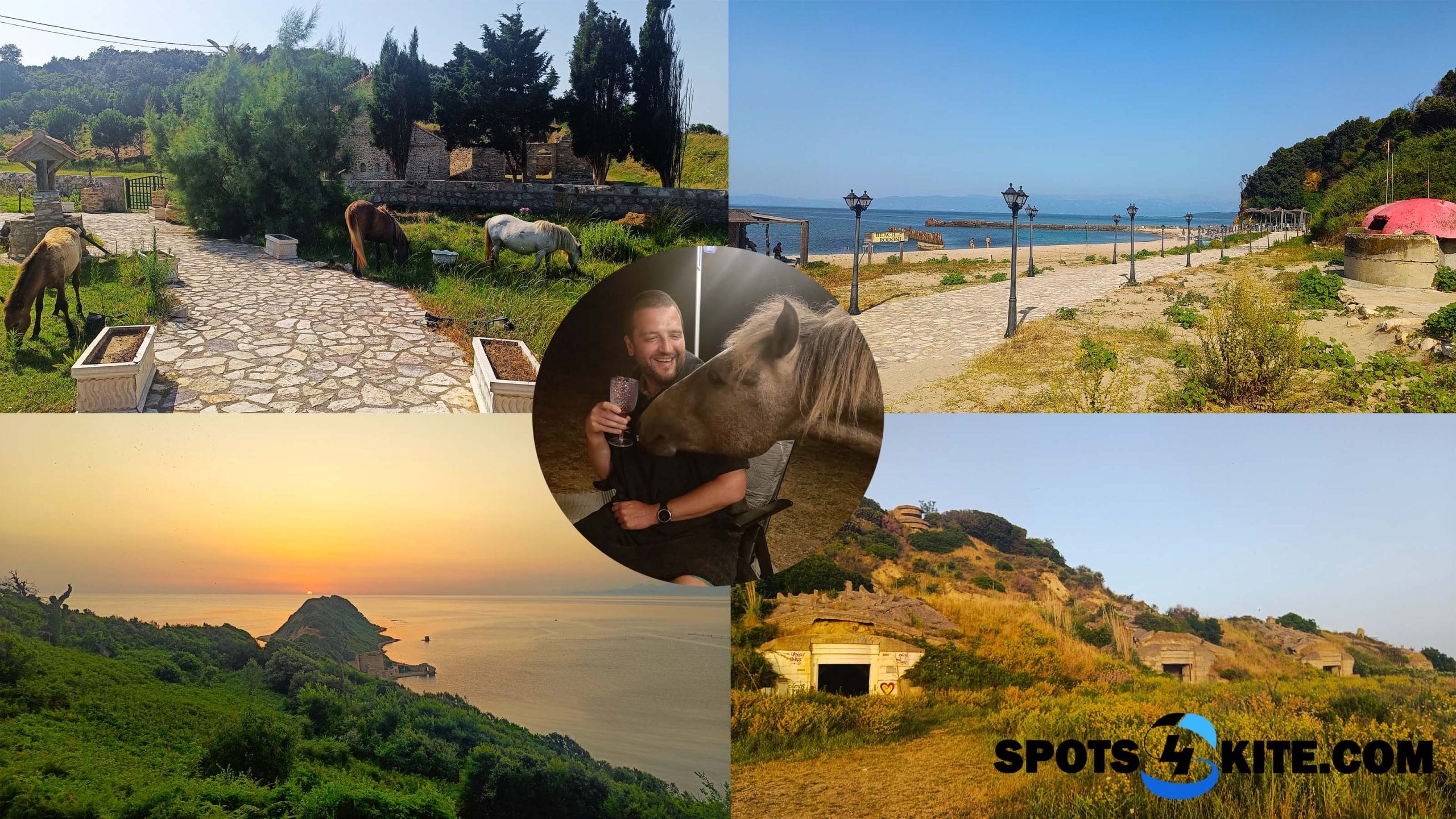
This entire area at the tip of the cape is also a former military zone, still crisscrossed by bunkers from past decades. One of these bunkers right on Rodonit Beach has even been converted into a small beach bar with basic facilities. The bartender gave us a short talk about the bunkers and the strategic importance of this fascinating place.
We took the opportunity to spend the night and had a unique evening in the company of half-wild horses. Since the forecast for the next few days didn’t promise any wind, we decided to head back north and visit the Shengjin area and its famous sand dunes.
Shengjin and Rana e Hedhun
The beaches around Shengjin are often mentioned in kite travel guides as potential kitesurfing spots, but in our experience, we wouldn’t really recommend this area for kiting. The town itself is very busy, with massive hotel construction projects extending south and now even creeping north of the city. Beach businesses have taken over almost up to the sand dunes of Rana e Hedhun. Here, you’ll already find smaller resorts, but new parking lots, beach bars, and formerly wild beaches are being taken over by businesses, private bars, and rows of sunbeds with umbrellas. Kitesurfing here might only be possible outside the main summer season—in May or early June.
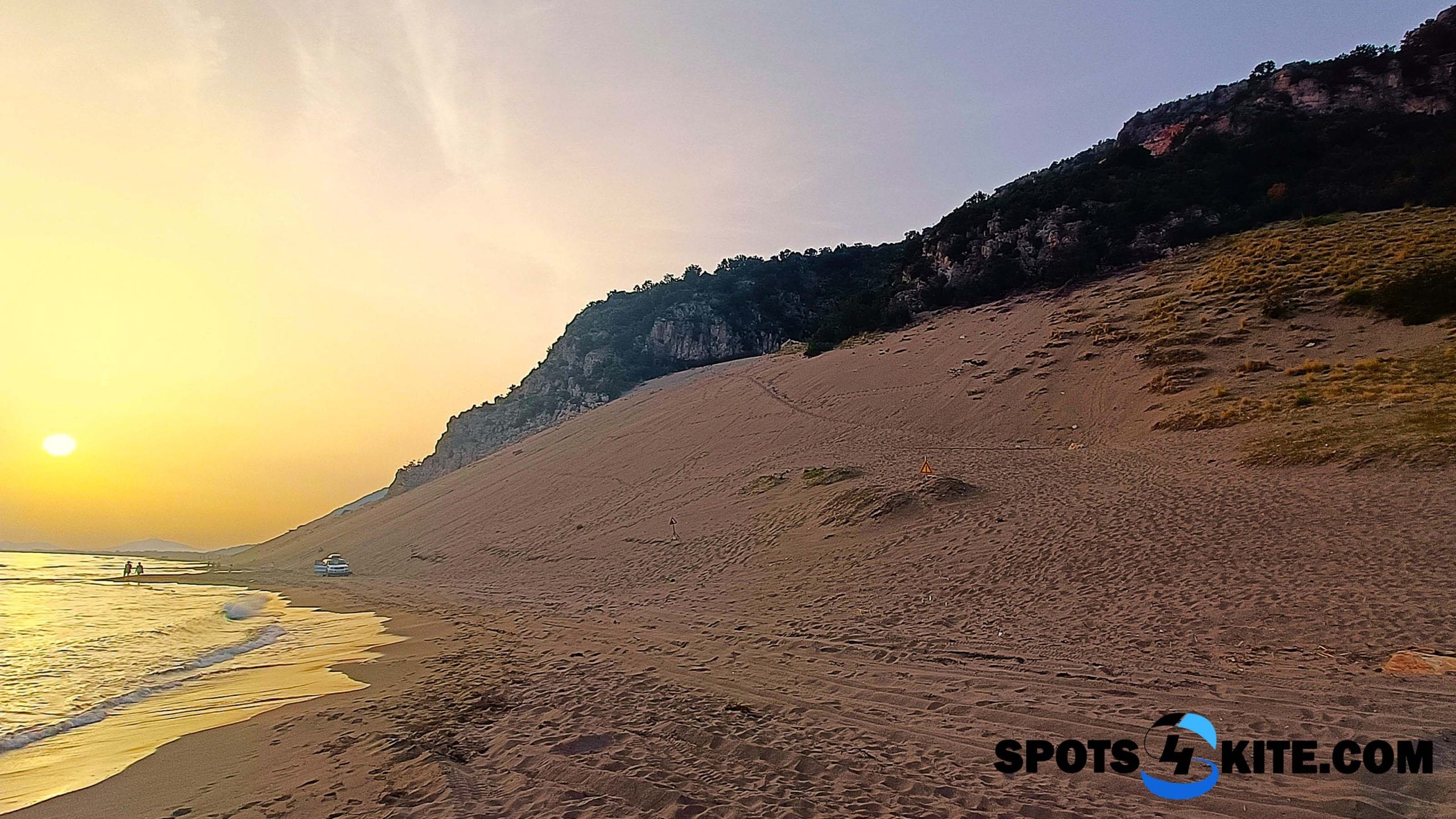
That said, the sand dunes themselves are an incredible experience. Formed by wind on the steep slopes of the coastal mountains, the dunes stretch about 600 meters along the beach and rise up to 300 meters high. Climbing up the loose sand all the way to the mountain’s peak is tough work, but the view and the ride down are absolutely worth it. We slid down the entire 300 meters on our backsides, straight to the water’s edge! We enjoyed the sunset and the relatively calm environment, as there were only a few tourists around by then.
Our next planned kitesurfing stop was the beaches near the Divjaka National Park. We spent the night about a kilometer away from the dunes on a private parking lot, and the next morning, we headed south once again.
Divjaka: A Promising but Frustrating Kitesurfing Spot
The third kitesurfing spot we wanted to explore in Albania was Divjaka Beach. This is a huge beach that stretches around the Divjaka National Park and the Karavasta Lagoons. You reach the beach via a road from the national park entrance, where there are restaurants, shops, and small hotels. From the main road, there’s a turnoff onto a hard-packed sandy track that leads directly to the beach. Parking for cars and campervans is tolerated right on the beach, and we spent two nights here.
The beach itself is vast, stretching for several kilometers and hundreds of meters wide. Entry into the water is very gradual—up to 500 meters from the shore, the water is still only waist-deep. However, riding here means dealing with a very choppy surface and small waves that form close to the beach. Further out, the water calms down and becomes really enjoyable to ride.

Our Shortest Kite Session in Albania
When we arrived, it was raining, but the forecast for the next day promised up to 18 knots. In the morning, we eagerly watched the wind build. Around one in the afternoon, it was strong enough to test out our 13-meter kite. We quickly pumped it up, and Veronika was on the water within minutes. The wind was solid, stable, and everything was lining up for a great windy afternoon.
Unfortunately, we didn’t get much understanding from the local police, who had been patrolling the beach all day. As soon as they saw the kite on the water, they rushed over, gesturing for us to get out of the water immediately. They explained that kiting wasn’t allowed there, as it endangered the safety of swimmers. At that time, there were maybe 20 people on the whole beach and about six in the water, and we’d been starting far from the sunbeds and umbrellas. Even though the beach and coastline had plenty of space, the police were firm—no kites, no water sports. At least they didn’t cause any more problems. When we finished the session and landed the kite, they gave us a friendly wave and left.
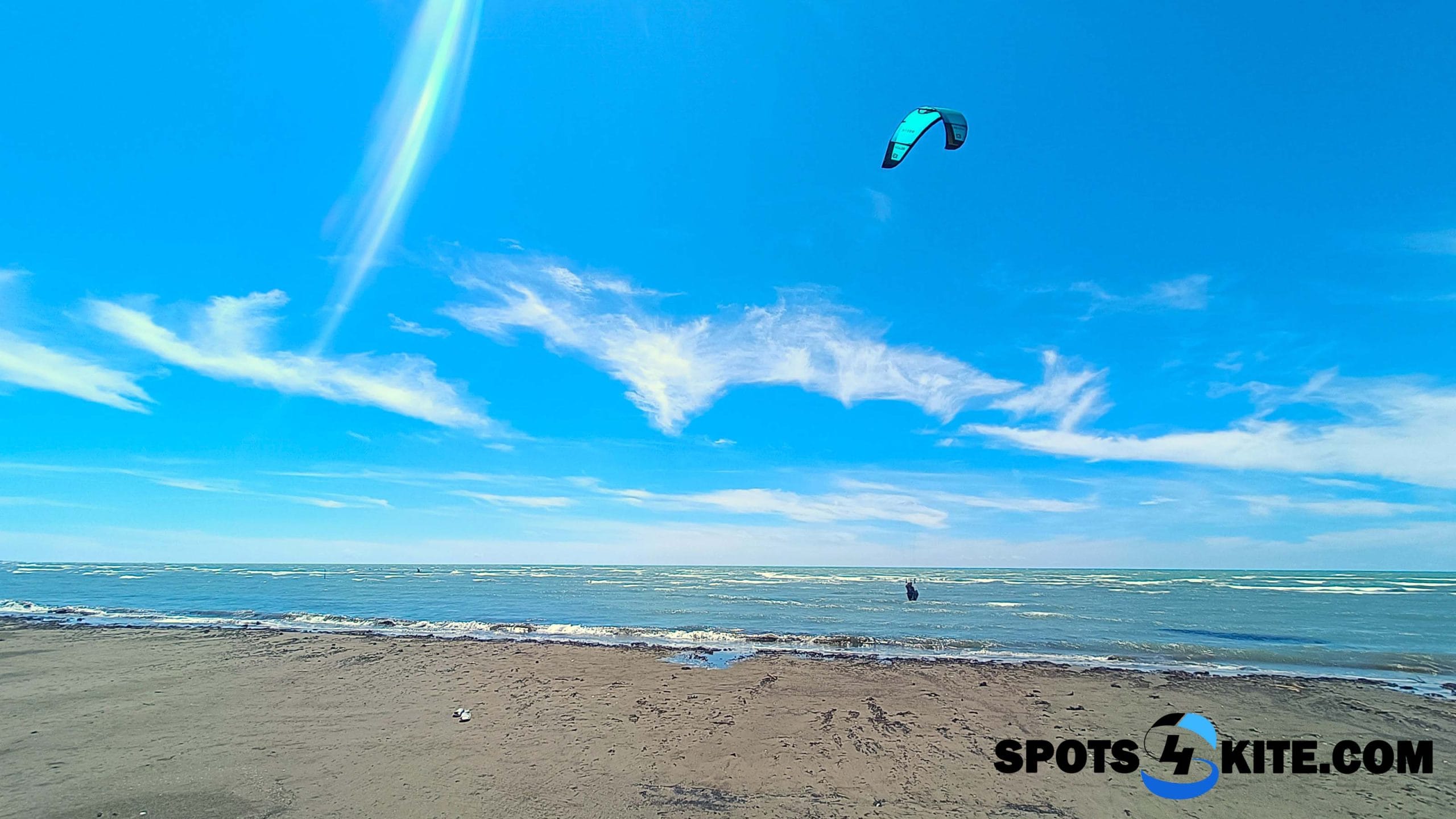
Although Divjaka Beach felt more wild than commercial, and for a moment it felt like we were in a kitesurfing paradise, we spent the rest of the afternoon just watching the wind that, true to the forecast, kept blowing beautifully until evening.
Pish Poro Beach – Kitesurf Whitehouse Resort
The last kitesurfing spot we visited in Albania—and also the last place where we managed to squeeze in some actual kiting—was the Kitesurf Whitehouse Resort at Pish Poro Beach. When we arrived, we met the owner, Artur, who immediately asked if we were the group that had been kicked out of the water by the police at Divjaka Beach.
Kitesurf Whitehouse Resort
Artur showed us around his resort, which he had been developing for the past two years. There are 14 white bungalows, each with four beds and a private toilet, plus outdoor showers. There’s also a restaurant serving fish specialties and a beach bar with sun loungers. On the beach itself, he showed us the designated area for launching kites and explained the local rules to ensure we wouldn’t have any trouble with the police again. The main rule: don’t ride too close to the sunbeds and umbrellas. During our stay, there were very few swimmers or beachgoers anyway.
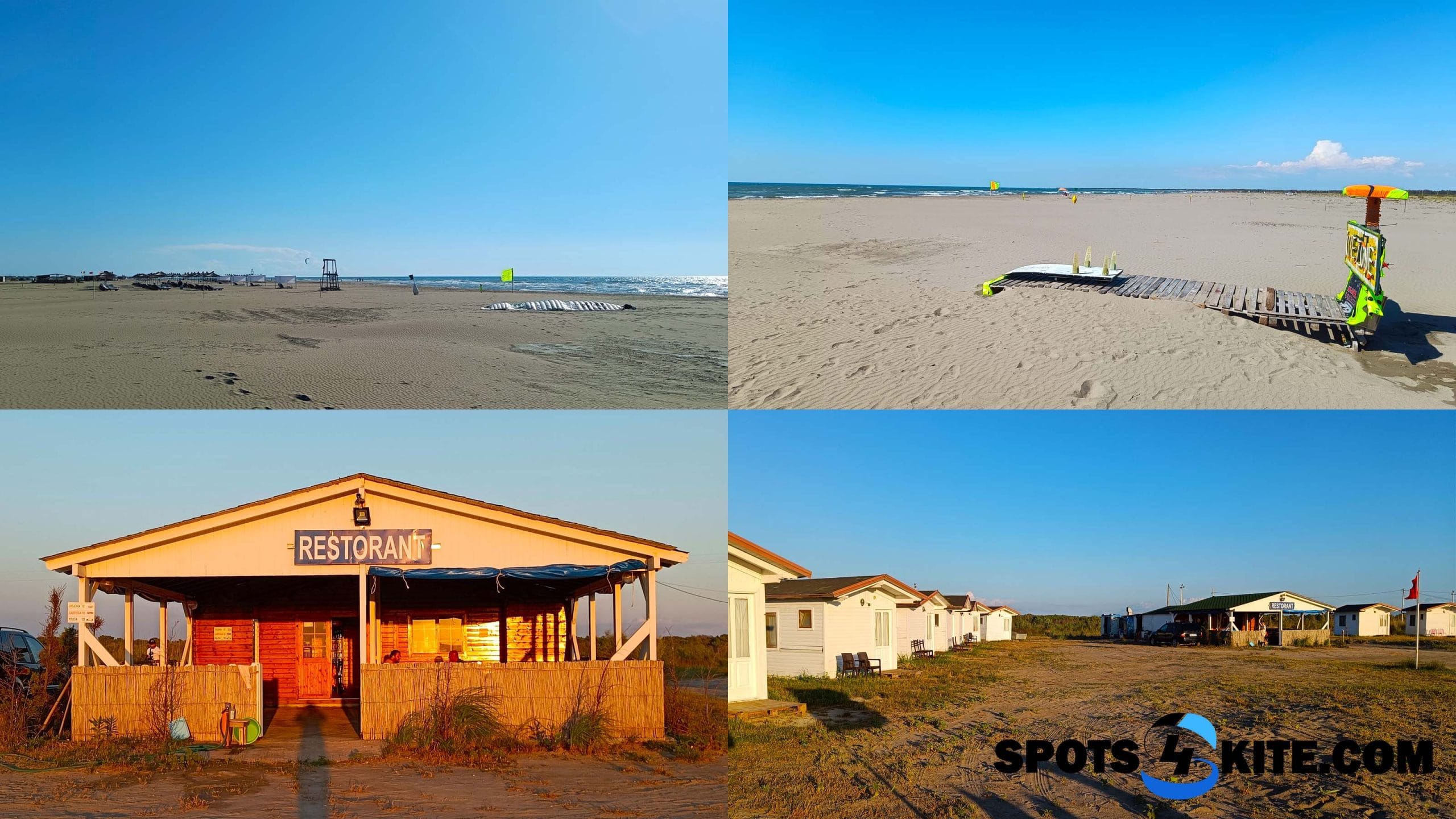
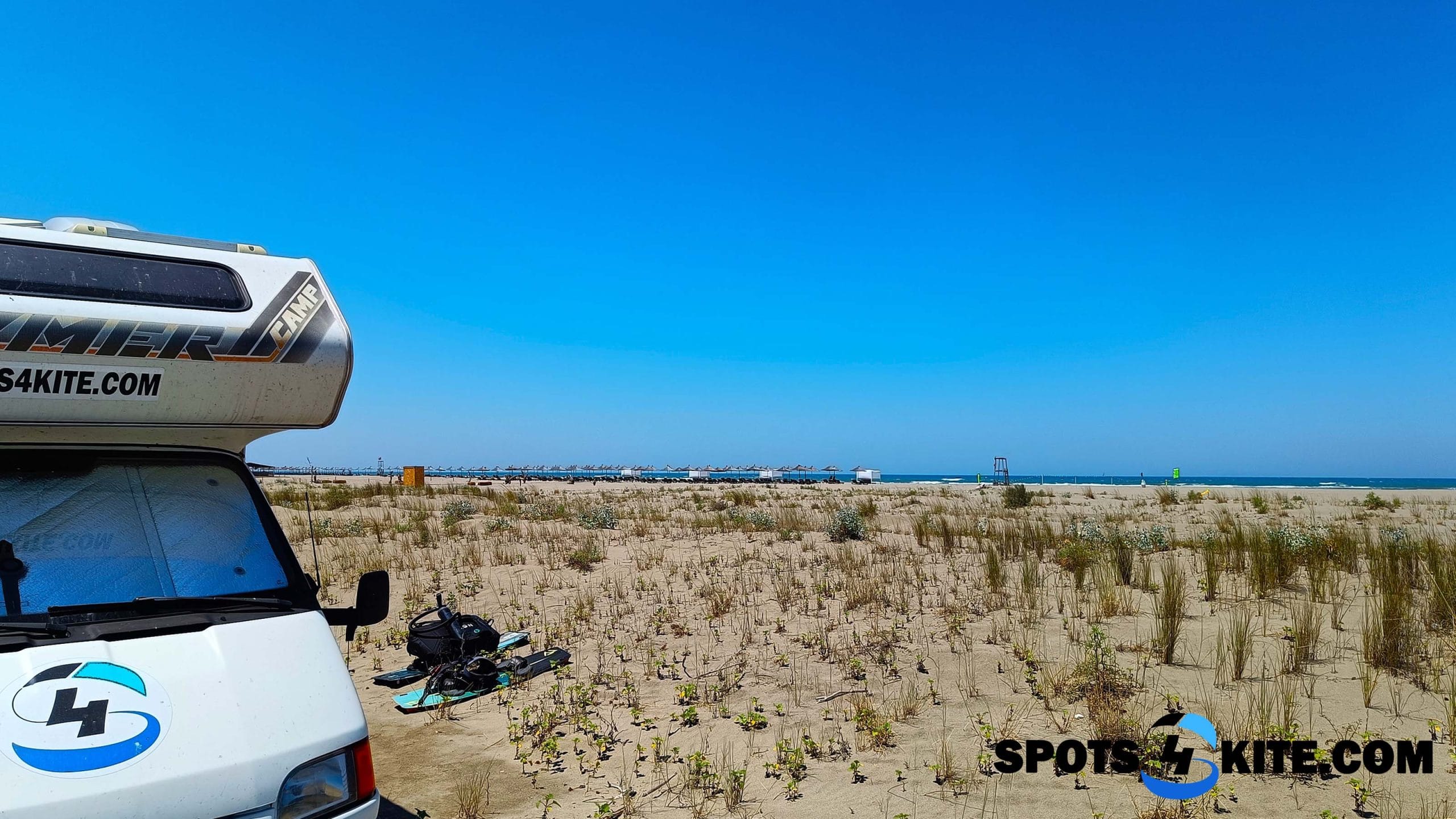
For a €10 fee, you can park your camper directly in the resort’s parking lot and use the outdoor showers and restaurant’s toilets. Alternatively, you can drive closer to the beach and free-camp anywhere that’s suitable—which is exactly what we decided to do, finding a good place with a view of the water.
In the evening, Artur invited us to his restaurant for a chat, sharing stories about the local conditions, kitesurfing, and the challenges with the police. He gave us some insight into why we’d been kicked off the water at Divjaka. Kitesurfing and other water sports aren’t banned in Albania, but they’re often misunderstood. Kitesurfers are considered “vessels” here, and any kind of vessel is generally unwelcome on Albanian shores because of issues with smuggling. Artur had to make an agreement with the local authorities that he would only use a designated area of the beach, and kitesurfers would be tolerated there as his guests or students.
Pish Poro Beach: Spot Description and Conditions
Pish Poro Beach is the southernmost part of a stretch of coastline generally known as Semanit Beach. The beach is wide and sandy, with no obstacles. About 200 meters from the shore, the landscape transitions to grassy patches, and various small roads wind down to the beach.
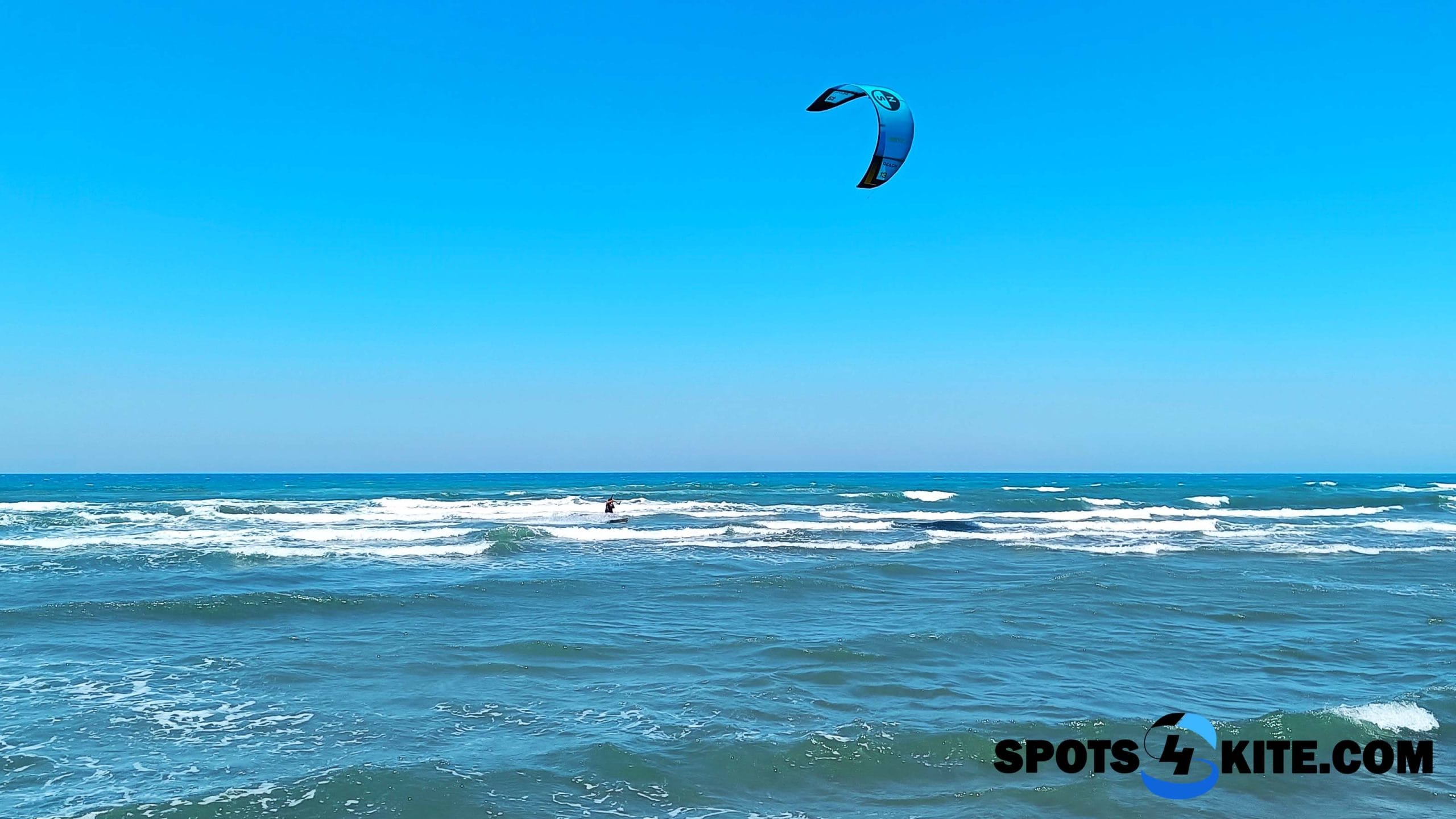
The water entry here is gradual as well, but the shoreline twists and turns, and the sandy bottom rises and falls in places. These uneven features create strong waves and currents right at the beach. The spot works for various westerly wind directions, mostly onshore.
Our Kitesurfing Experience
On the afternoon of our arrival, the wind was around 12 knots, so we set up the 15-meter kite for a first test session, with Karel riding alone. Nobody else was on the beach, except for Artur on his 17-meter kite. The wind was stable for about two hours, but then it quickly faded.
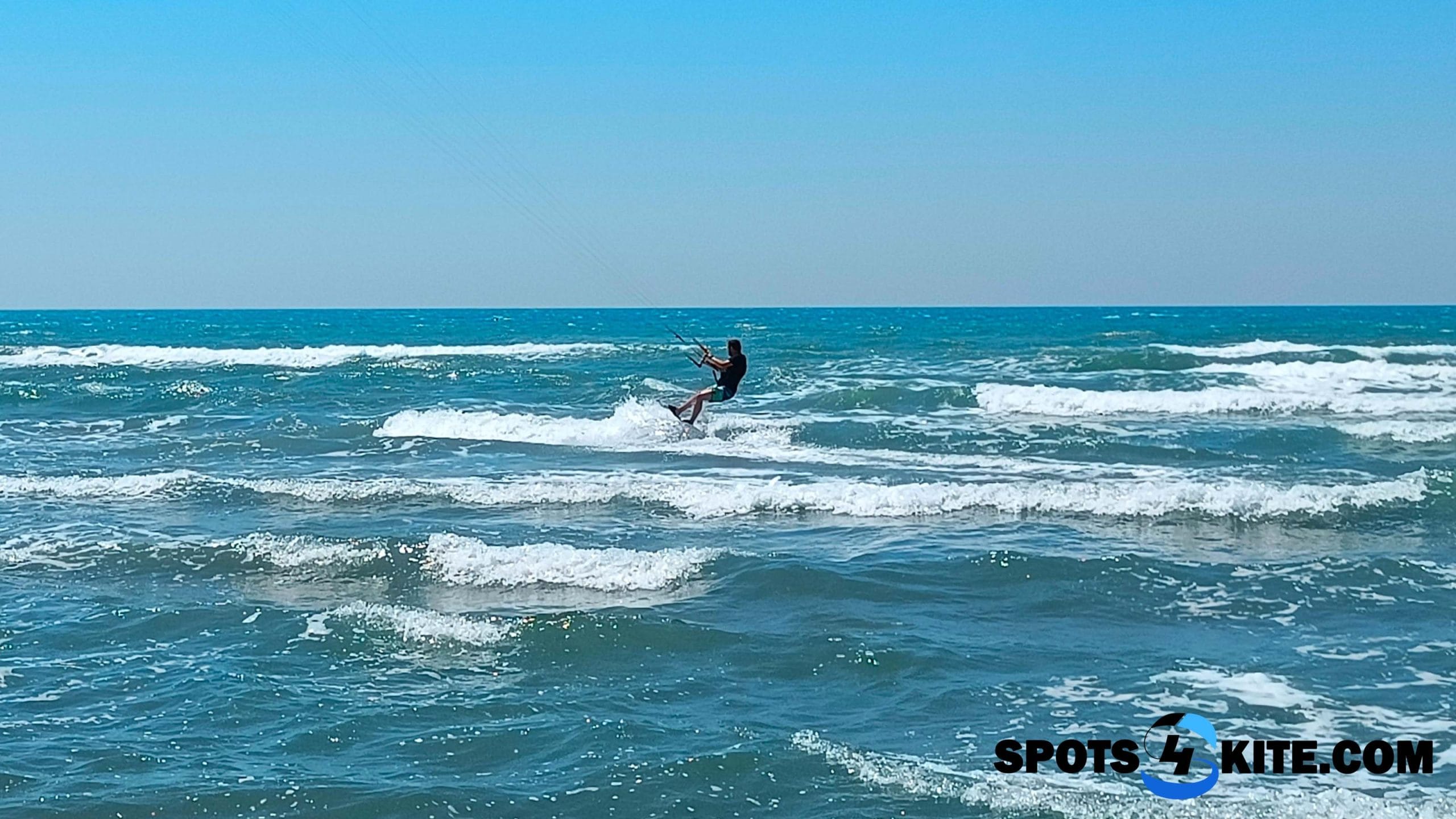
The forecast for the next day promised stronger wind, and it really delivered. Veronika took out the 13-meter kite and rode for about an hour. Then Karel took the 15-meter kite out again, and finally switched to his surfboard.
We were a bit surprised by the conditions here. Even though the wind wasn’t super strong, the waves and currents near the shore were very powerful. The waves rolled in one after another, constantly shifting, making it very difficult to work your way a few dozen meters upwind from the shore. About 200 meters out, the water was calmer and almost perfect, but any small mistake or wind lull meant you’d get pushed right back into the messy shorebreak. That hour-long session was really exhausting!
Overall, though, White House Resort and Pish Poro Beach are beautiful places with a special kind of charm. Unfortunately, the forecast for the coming days called for clouds, showers, and almost no wind, so we decided to end our Albanian road trip here and set our sights on the Greek border that same evening.
Reflections on Albania: Beauty, Challenges, and Kitesurfing Potential
So, what can we say in conclusion? Albania as a kitesurfing destination surprised and disappointed us at the same time. The disappointment stemmed mostly from seeing how the country’s beautiful and vast beaches are being transformed one by one into commercial playgrounds full of sunbeds and umbrellas. Kitesurfing here doesn’t have any permanent or stable bases along the coast—just a few small local communities that move from beach to beach whenever the conditions are right.
We had two options. Either stick to the known locations—most of which are slowly turning into commercialized resorts. Or risk venturing out to find a truly wild and untouched beach. But on this road trip, we only had limited time and didn’t want to drive the entire coastline without any guidance. And as we learned at our final stop at Kitesurf White House Resort, even that could mean risking a run-in with the police.
Another source of frustration and disapointment was the weather and wind conditions. We had only a few truly windy and epic days—whether at our stop in Croatia’s Neretva region or during our time exploring Albania itself. But of course, that’s not Albania’s fault.
On the other hand, we didn’t regret a single day or experience along the way. Everything had its own unique charm. Albania still managed to convince us that it has something to offer kitesurfers—you just need to plan better and hope for a bit of luck with the wind. The thermal winds here aren’t as consistent and reliable as in other places, but when the forecast does show wind, it really delivers.
We probably wouldn’t recommend Albania as a kitesurfing destination for someone who wants hotel comfort, easy beach access, and reliable conditions for riding all afternoon. But for adventurers—especially those traveling in a campervan—who love exploring off-the-beaten-path spots, Albania definitely has its own special appeal.
By now, we’ve also learned about other spots beyond Rinia Sector—places with wilder beaches and small local kitesurfing communities that we didn’t know about before or didn’t have time to explore on this trip. It’s definitely possible that we’ll head back to Albania one day to discover them for ourselves.

Author: Spots4Kite
The team behind Spots4Kite.
